

Oracles supply price data to the chain. In Bend, a market’s oracle answers: “How many USD is 1 unit of this collateral worth?” so the protocol can value collateral, set borrowing capacity, and trigger liquidations.Documentation Index
Fetch the complete documentation index at: https://berachain-422fce37-feat-nodes-section-reno.mintlify.app/llms.txt
Use this file to discover all available pages before exploring further.
Oracles in Bend markets
Oracles are used to:- Value collateral
- Compute borrowing capacity
- Trigger liquidations when positions are undercollateralized
- Support interest rate logic
Bend implementation
Bend is oracle-agnostic: each market specifies its oracle in its parameters. Market creators choose the feed that fits the asset (e.g. Chainlink, Redstone, API3, Pyth, Chronicle, or a custom implementation).Compatible oracle types
- Price feed oracles: External feeds for exchange rates (Chainlink, Redstone, API3, Pyth, Chronicle).
- Exchange rate oracles: For wrapped or rebasing tokens with deterministic rates (e.g. wstETH/stETH).
- Fixed-price oracles: For assets with a known peg (e.g. stablecoins).
Getting price data
Steps to get the current price of a collateral (e.g. $WBERA).1. Get market ID
Find the Market ID on Berachain Bend.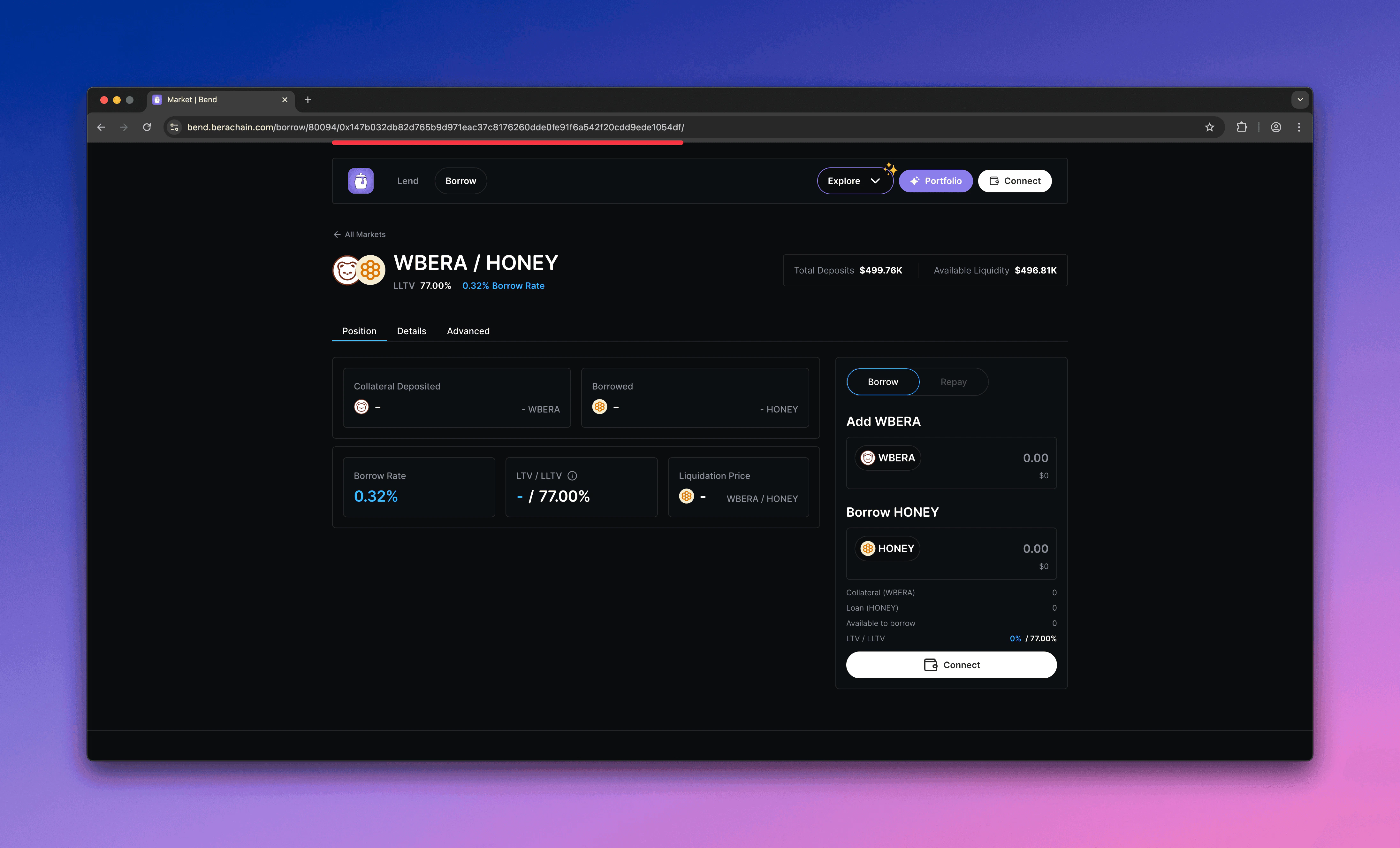
2. Find oracle address
In BeraScan look up the Morpho (Vault) address and open it: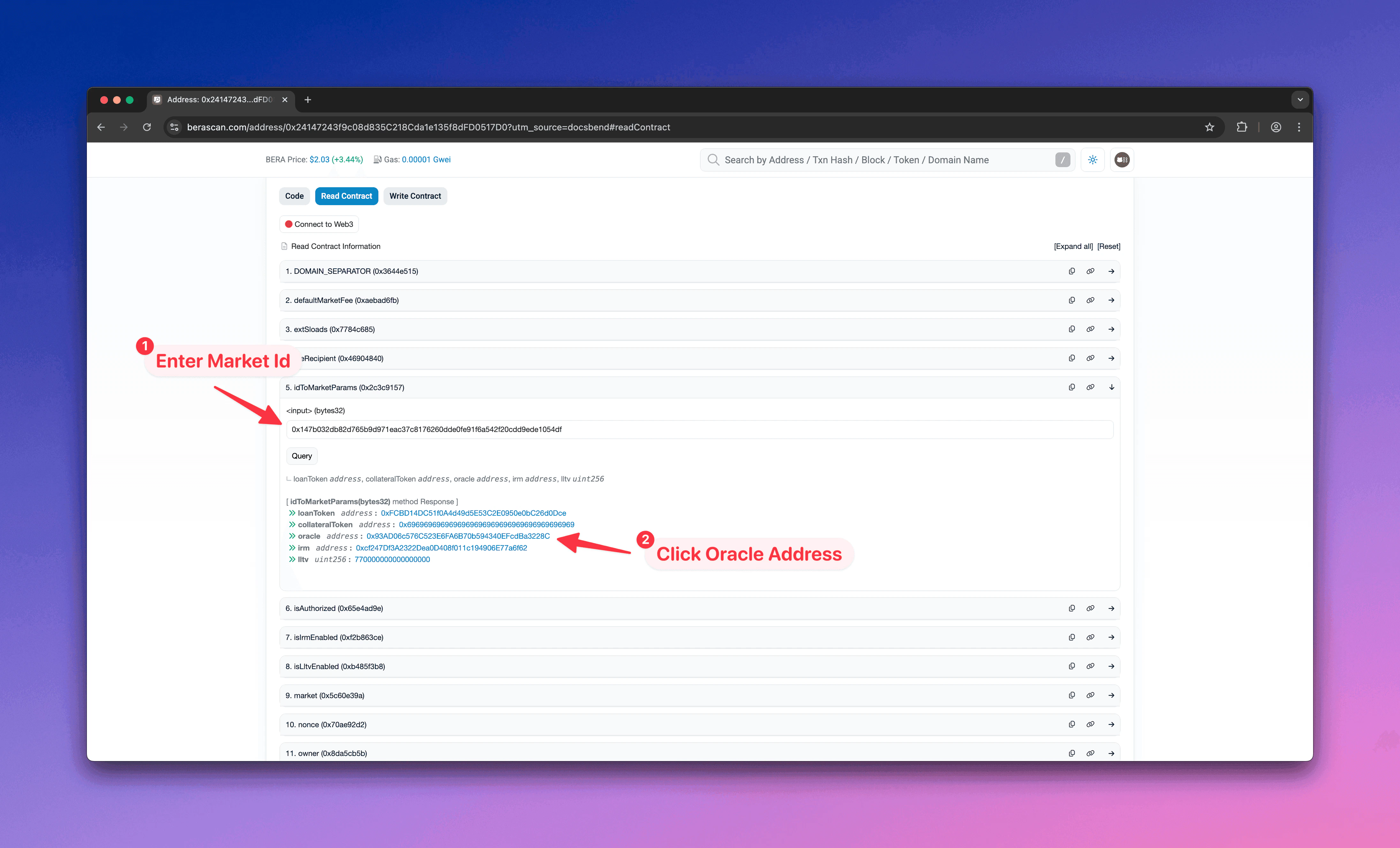
3. Get base feed address
In the oracle contract, read BASE_FEED_1 and open the linked address.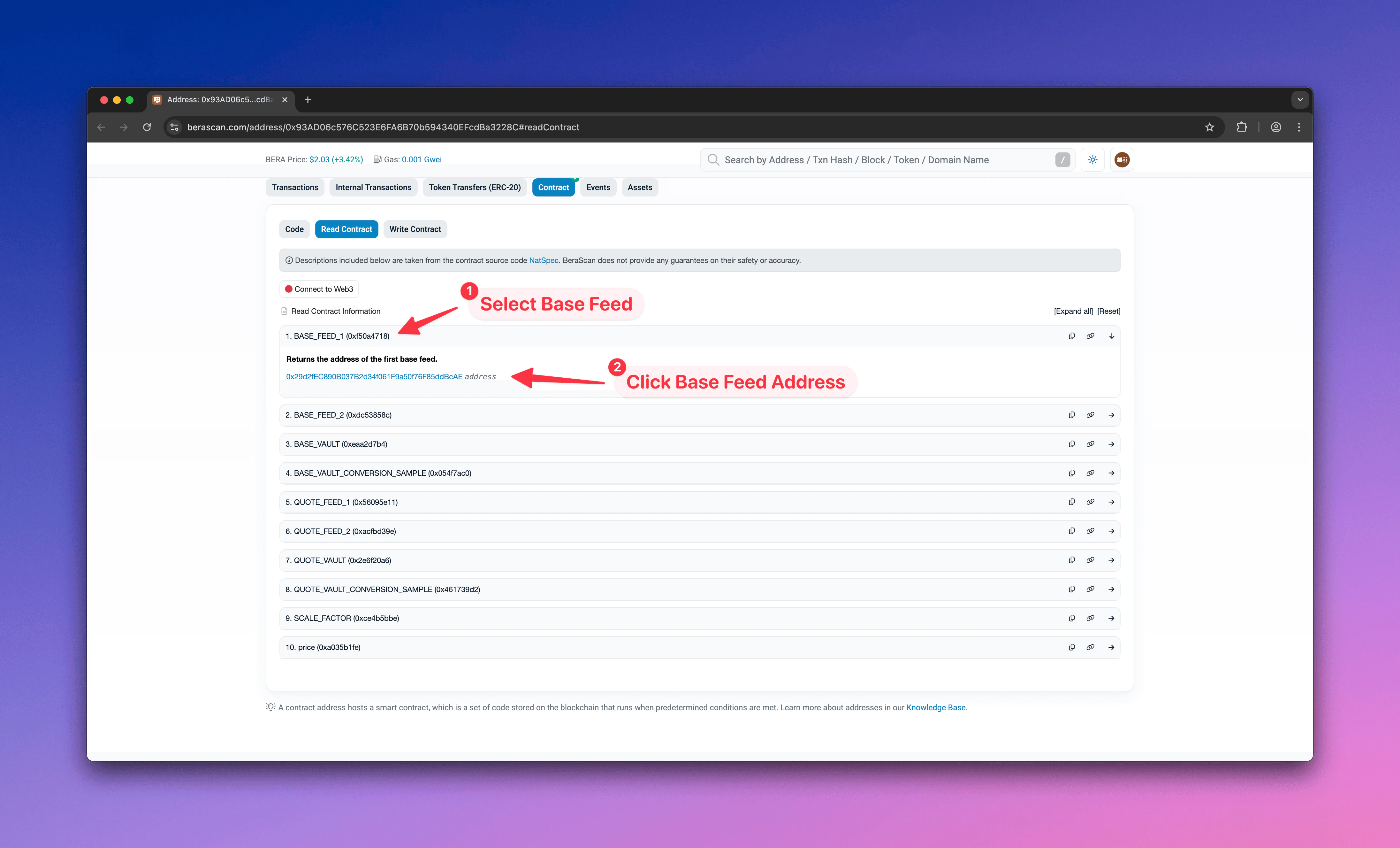
4. Get latest answer
In the base feed contract (or its proxy), calllatestAnswer.
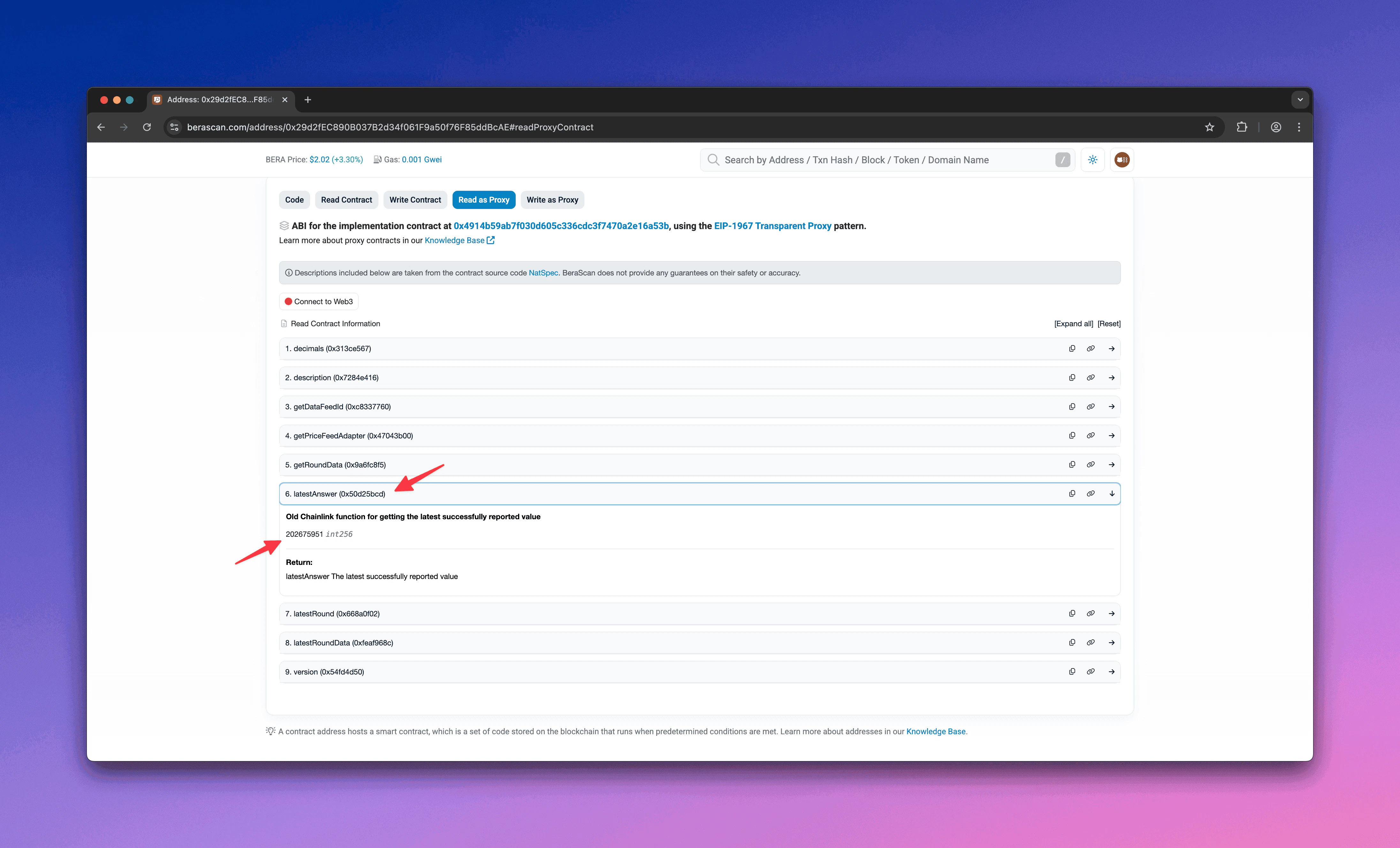
202675951 means 2.02675951 USD (divide by 100000000).
Oracle security
Oracle choice is critical and immutable for a Bend market. Before using a market:- Verify the oracle implementation
- Understand the price sources
- Consider manipulation or failure modes